
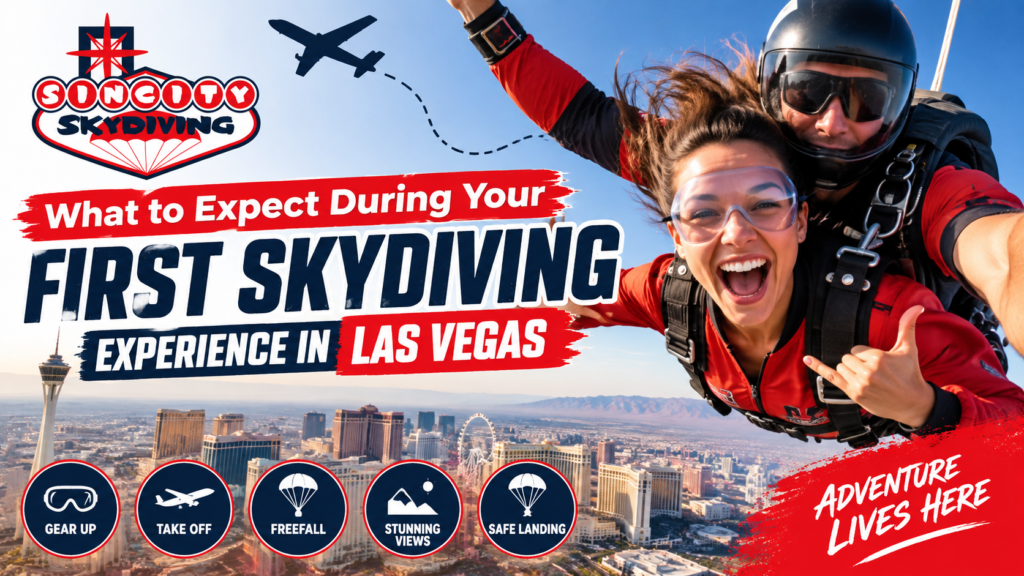
Your first skydive is not just another adventure activity. It is one of those rare moments where excitement, fear, trust, and pure awe all show up at the same time.
If you are planning first time skydiving in Las Vegas, the good news is this: you do not need previous experience to enjoy it. Most beginners choose a tandem skydiving Las Vegas experience, where you are securely attached to a trained instructor who manages the technical parts of the jump while you focus on the experience.
In simple terms, your first skydive usually includes check-in, safety training, gearing up, an aircraft ride, the jump, parachute flight, landing, and time to relive the moment afterward. For many people, the most surprising part is that the fear is strongest before the jump, not during it.
This beginner skydiving guide explains what to expect skydiving for the first time, how tandem skydiving works, what to wear, how to prepare, and how to make your Las Vegas skydiving experience smoother from start to finish.
What Is Tandem Skydiving?
Tandem skydiving is a first-jump method where a student is attached to a certified tandem instructor using a specialized harness system.
It is the most common option for beginners because the instructor handles the parachute system, body positioning guidance, canopy control, and landing process. The student still receives training, but the responsibility is shared with an experienced professional.
According to the United States Parachute Association, tandem, accelerated freefall, instructor-assisted deployment, and static-line jumps are all recognized first-jump methods within USPA’s student training pathway. USPA-affiliated drop zones must follow USPA Basic Safety Requirements and use USPA-rated instructors.
For someone booking a Las Vegas tandem skydive, tandem is typically the most practical entry point because it allows you to experience the jump without committing to a full solo skydiving course.
Why Las Vegas Is a Popular Place for a First Skydive
A Las Vegas skydiving experience feels different from jumping in many other locations because of the desert scenery. Instead of looking down at dense cities or forests, you may see wide-open Nevada desert, mountain ranges, dry lake beds, and the dramatic contrast of the Las Vegas area.
For many visitors, skydiving near Las Vegas becomes part of a bigger trip. It fits naturally into bachelor or bachelorette weekends, birthday trips, couples’ adventures, group travel, and bucket list vacations.
A Nevada skydiving experience also appeals to locals who want something memorable without leaving the region. Whether you are visiting or live nearby, skydiving over the Las Vegas desert gives the jump a cinematic feeling that is hard to duplicate indoors or at ground level.
How Does Tandem Skydiving Work?
Tandem skydiving works by connecting the student to an instructor with a front harness and tandem parachute system before exiting the aircraft together.
The tandem instructor is responsible for managing the skydive sequence, including aircraft exit, freefall stability, parachute deployment, canopy flight, and landing. Your role is to listen carefully, follow body-position instructions, and communicate if you have questions.
A typical tandem parachute system includes a main parachute, reserve parachute, harness/container system, and passenger harness. Federal aviation regulations define tandem systems as including an approved main parachute, approved reserve parachute, approved harness/container, and separate passenger harness; tandem systems must also have an operational automatic activation device.
That does not mean skydiving is risk-free. It is still an extreme sport. But the structure of tandem skydiving is designed to make a first skydive experience more approachable for beginners.
What Happens Before Your First Jump?
Your first-time skydiving day starts on the ground. This part matters more than beginners realize.
1. Check-In and Paperwork
When you arrive, you will usually check in, confirm your reservation, show identification, and complete required documents. Many skydiving centers also verify age, weight, weather conditions, and eligibility before moving you into training.
This is a good time to ask practical questions such as:
- How long will the full visit take?
- Are weather delays possible today?
- Can friends or family watch?
- When will photos or videos be available?
- What should I remove from my pockets?
2. Beginner Skydiving Training
Skydiving training for beginners is usually short, focused, and practical for tandem students.
You are not expected to learn everything a licensed skydiver knows. Instead, your instructor or ground team will explain what you need for your specific jump.
Training often covers:
- How the tandem harness works
- What body position to use during exit
- Where to place your hands
- How to position your legs for landing
- What to expect during parachute deployment
- How to listen to instructor commands
- Basic skydiving safety tips
The biggest thing to remember is simple: listen closely and do not try to improvise. Your instructor has a process. Follow it.
3. Getting Geared Up
Once training is complete, you will be fitted with a tandem harness and any required gear. The harness may feel snug, especially around the legs and shoulders. That is normal.
You may also receive goggles, a jumpsuit depending on the operator, and final instructions before heading to the aircraft.
First Time Skydiving Tips That Actually Help
Tip 1: Book Earlier in the Day
Morning jumps often give you more flexibility if weather delays happen. Skydiving is weather-dependent, and safe operators will not rush conditions just to keep a schedule.
Tip 2: Eat Light, Not Heavy
A small, balanced meal is usually better than skipping food or eating a huge meal right before your jump.
Tip 3: Ask Questions Before You Gear Up
Do not hold back because you feel embarrassed. First-timers ask the same questions every day. A good instructor would rather explain something twice than have you stay confused.
Tip 4: Do Not Overthink the Door
The door moment is intense. That is normal. Focus on your instructor’s cues, not your internal debate.
Tip 5: Buy Photos or Video If This Is a Bucket List Jump
If this is your skydiving bucket list adventure, consider capturing it. Many people think they will remember everything, but adrenaline can blur the details.
Is First Time Skydiving Safe?
Skydiving carries inherent risk, but modern tandem skydiving uses structured training, specialized equipment, instructor oversight, and regulated parachute systems to manage that risk.
USPA safety data shows that in 2025, members reported 3.47 million skydives and 16 civilian skydiving fatalities in the United States. In 2024, USPA reported 9 fatalities from 3.88 million skydives, or 0.23 fatalities per 100,000 jumps.
Those numbers are not a guarantee for any individual jump, and no responsible skydiving company should present the sport as risk-free. The honest answer is that skydiving is an extreme activity with real risk, but tandem skydiving is specifically designed as a guided first-jump format.
When choosing the best skydiving in Las Vegas for your needs, look for:
- Experienced tandem instructors
- Clear safety briefing
- Well-maintained equipment
- Transparent eligibility rules
- Strong reviews from first-time jumpers
- Professional communication
- Weather-related decision-making that prioritizes safety
A company that takes safety seriously should be willing to answer your questions without making you feel rushed.
Tandem Skydiving vs. Solo Training: What Should Beginners Choose?
Option | Best For | Training Level | Experience |
Tandem skydiving | First-time jumpers, tourists, bucket list experiences | Short practical briefing | Attached to instructor |
Accelerated Freefall | People who want to become licensed skydivers | More intensive | Student participates more actively |
Static-line/IAD | Structured student progression | Formal training | Instructor-assisted deployment method |
For most people searching for what to expect skydiving for the first time, tandem is the right starting point. It gives you the full emotional and scenic experience without requiring a long training commitment.
Common Beginner Mistakes to Avoid
First-time skydivers usually do not need advanced skills, but they can still make the day smoother by avoiding a few common mistakes.
Do not arrive late. Skydiving operations run on aircraft loads, weather windows, instructor availability, and safety processes.
Do not ignore clothing instructions. Footwear and loose items matter.
Do not assume weather delays mean poor service. In skydiving, caution is a good sign.
Do not treat training like a formality. The briefing may be short, but it matters.
Do not focus only on fear. You are also there for the view, the story, and the feeling after landing.
Final Takeaway: Your First Skydive Is Bigger Than the Jump
Your first time skydiving in Las Vegas is not just about stepping out of an aircraft. It is about trusting the process, moving through fear, seeing the desert from a completely new angle, and landing with a story you will probably tell for years.
For beginners, the best approach is simple: choose a reputable Las Vegas tandem skydive provider, prepare properly, ask questions, follow instructions, and stay open to the experience.
If skydiving has been sitting on your bucket list, Las Vegas is a memorable place to finally do it.
FAQ's
Yes. Tandem skydiving is the most common first-jump option because you are attached to a trained instructor who manages the technical parts of the skydive.
The full visit can take several hours depending on check-in, training, aircraft schedule, weather, and group size. The actual jump is only one part of the experience.
Yes, but tandem skydiving training for beginners is usually brief and focused. You will learn body position, aircraft exit basics, landing position, and instructor signals.
Wear comfortable clothes and secure closed-toe shoes. Avoid sandals, loose accessories, heavy jewelry, and anything that could interfere with the harness.
Yes, especially if you want a scenic desert jump and a memorable adventure close to the Las Vegas area. The views can include desert terrain, mountains, and wide-open Nevada landscapes.