
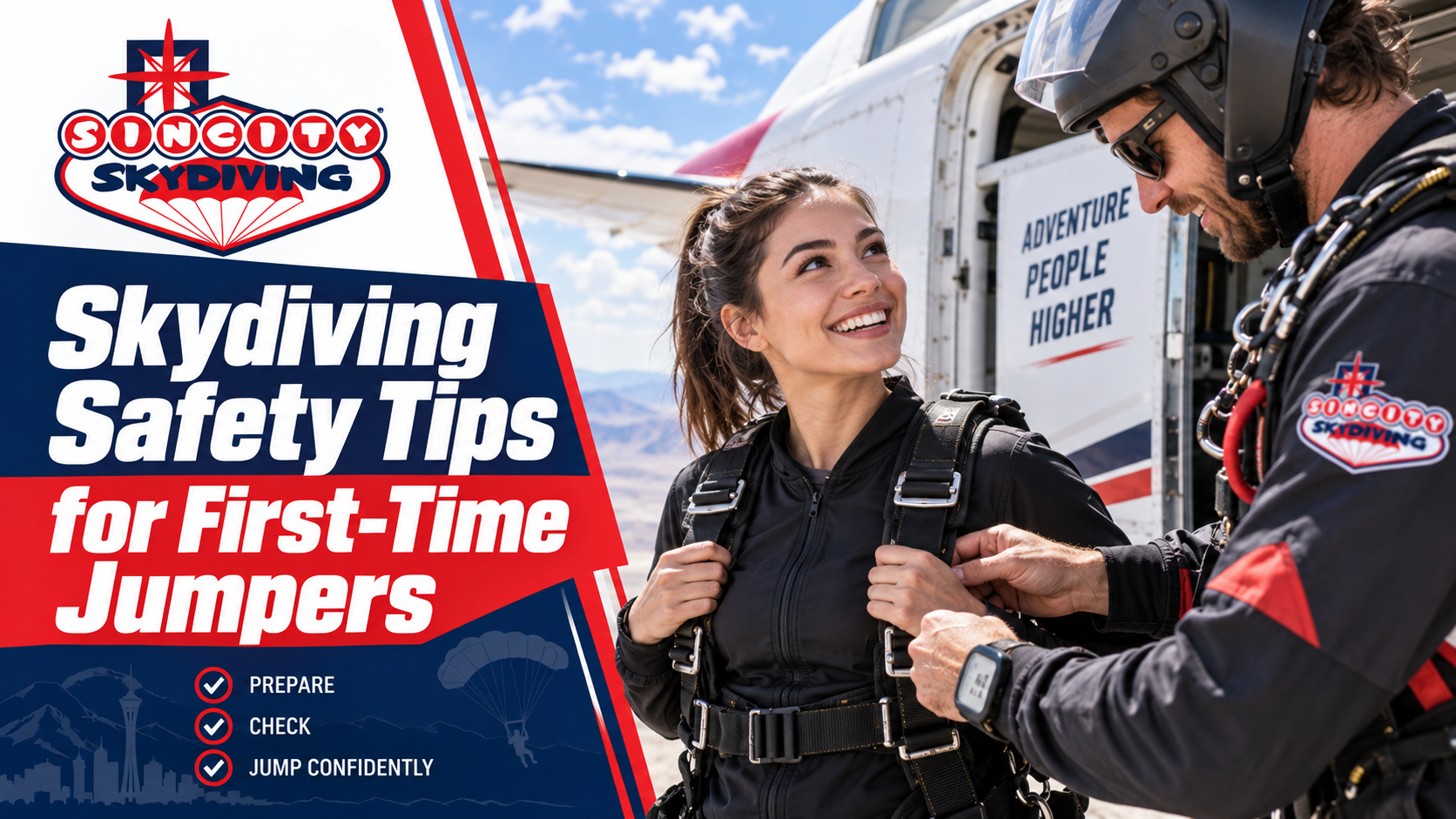
Skydiving is one of those rare adventures that feels impossible until the airplane door opens, the instructor gives the signal, and suddenly the fear turns into focus. For first-time jumpers, that mix of excitement and nervous energy is completely normal. The goal is not to eliminate fear. The goal is to understand the process, follow proven safety procedures, and choose the right professionals to guide you.
The most important skydiving safety tips are simple: jump with a reputable drop zone, listen carefully during training, follow your instructor’s body-position and landing instructions, disclose medical concerns, avoid alcohol or drugs before your jump, and wear properly fitted equipment.
According to the United States Parachute Association, USPA members reported 3.47 million skydives in 2025, with 16 civilian fatalities in the United States, equal to 0.46 fatalities per 100,000 jumps. Skydiving still carries real risk, but modern training, equipment, reserve systems, instructor standards, and safety procedures have significantly reduced risk over time.
Is Skydiving Safe for Beginners?
Skydiving can be a safe adventure for beginners when done through a qualified skydiving center, with trained instructors, properly maintained equipment, and clear safety procedures.
Most first-time jumpers choose tandem skydiving. In a tandem skydive, you are securely harnessed to an instructor and share a parachute system. The instructor manages the technical parts of the jump, including exit timing, freefall stability, parachute deployment, canopy control, and landing assistance. USPA describes tandem skydiving as the most convenient way to experience freefall, with training often taking less than 30 minutes.
That does not mean you are just “along for the ride.” Your awareness matters. Your job is to listen, stay relaxed, maintain the correct body position, and follow landing instructions.
Quick Skydiving Safety Tips for First-Time Jumpers
For a fast answer, here are the first skydive safety tips every beginner should know:
- Choose a USPA-affiliated or professionally recognized drop zone.
- Ask about instructor credentials, safety procedures, and equipment checks.
- Be honest about medical conditions, recent injuries, medications, and anxiety.
- Do not drink alcohol or use drugs before your jump.
- Eat light, hydrate, and sleep well the night before.
- Wear secure, comfortable clothing and closed-toe shoes.
- Pay attention during ground training, even if you feel nervous.
- Keep your chin up, hips forward, and body arched during freefall.
- Lift your legs when instructed during landing.
- Trust your instructor, but stay mentally present.
These are not just beginner skydiving guide basics. They are safe skydiving practices that help the instructor do their job and help you enjoy the jump with more confidence.
Choose the Right Drop Zone First
A safe skydive starts before you arrive at the airport. The biggest decision is not what outfit to wear or whether to buy the video package. It is choosing the right skydiving center.
USPA-affiliated drop zones in the United States pledge to follow USPA Basic Safety Requirements, use current USPA-rated instructors, provide required equipment, and follow USPA-developed instructional methods.
Before booking, look for:
What to Check | Why It Matters |
Instructor credentials | Confirms your tandem instructor is properly trained |
Equipment maintenance | Ensures parachute systems are inspected and packed correctly |
Weather policy | Shows the company does not rush unsafe jumps |
Safety briefing quality | A good briefing reflects a serious safety culture |
Reviews mentioning safety | Look for comments about professionalism, not just views |
Clear weight and health rules | Responsible operators enforce safety limits |
A trustworthy skydiving center will never make you feel silly for asking safety questions. In fact, good instructors usually appreciate it.
Understand Tandem Skydiving Safety Procedures
Tandem skydiving safety is built around layers of control. You have the instructor, the parachute system, the reserve parachute, altitude awareness, aircraft procedures, ground crew communication, and weather decisions all working together.
USPA Basic Safety Requirements state that anyone conducting a tandem jump must complete a tandem instructor course for the specific tandem parachute system, be certified on that system, and hold a current USPA Tandem Instructor rating.
Common tandem skydive safety procedures include:
- Pre-jump briefing
You learn body position, aircraft movement, exit posture, freefall basics, canopy flight expectations, and landing position. - Harness fitting and gear check
Your instructor or trained staff fit your harness and check connection points before boarding. - Aircraft safety instructions
You learn how to move inside the aircraft, where to place your hands, and how to stay attached and controlled before exit. - Exit and freefall control
Your instructor manages the exit count, body orientation, drogue deployment, and altitude awareness. - Parachute deployment and canopy flight
After the parachute opens, your instructor flies the canopy and prepares for landing. - Landing instructions
Most students are told to lift their legs at the right time so the instructor can manage the landing safely.
For first-time skydiving tips, this one matters most: do not improvise. The briefing may sound simple, but every instruction has a safety reason.
Know the Basics of Skydiving Equipment Safety
You do not need to become a parachute engineer before your first jump, but you should understand the main equipment involved.
A tandem parachute system typically includes:
- Main parachute: The primary canopy used for normal descent.
- Reserve parachute: A backup parachute packed separately.
- Harness and container system: The gear that connects the student and instructor to the parachute system.
- Drogue parachute: A small parachute used in tandem skydiving to help control freefall speed and stability.
- Automatic Activation Device, or AAD: A backup device designed to initiate reserve deployment under specific altitude and speed conditions.
The FAA requires all tandem parachutes to have an AAD installed on the reserve parachute. However, FAA guidance also makes clear that AADs are backup devices and do not replace training or timely emergency procedures.
That last part is important. Good skydiving risk management is not based on one device. It is based on trained people, proper gear, repeated checks, clear procedures, and conservative decision-making.
Skydiving Checklist for First-Time Jumpers
Use this simple skydiving checklist before your first jump:
Stage | Safety Action |
Before booking | Research the drop zone and safety reputation |
Before arrival | Read all requirements and restrictions |
At check-in | Disclose health issues, medications, and concerns |
During training | Ask questions if anything is unclear |
Gear fitting | Speak up if the harness feels painfully tight or oddly loose |
In the aircraft | Stay seated and follow instructor instructions |
Before exit | Keep your hands and body exactly where instructed |
During freefall | Maintain the body position taught in training |
Under canopy | Listen and enjoy the ride |
Landing | Lift your legs when told |
This first jump skydiving advice sounds basic, but basic is what keeps adventure sports controlled.
What Not to Do Before Skydiving
Safe skydiving practices include knowing what to avoid.
Do not:
- Drink alcohol before your jump.
- Use recreational drugs.
- Hide medical conditions.
- Skip breakfast completely.
- Wear loose accessories.
- Argue with weather delays.
- Bring your own camera or phone on the jump.
- Ignore the instructor because you watched videos online.
USPA Basic Safety Requirements state that no person may make or attempt a parachute jump while under the influence of alcohol or any drug that affects faculties contrary to safety, and no one may jump within 8 hours after consuming alcohol.
Also, personal cameras are generally not allowed for first-time jumpers. USPA rules prohibit tandem students or instructors from using extendable or fixed pole camera mounts, and tandem camera use is restricted to qualified tandem rating holders under specific requirements.
Expert Tips for a Better and Safer First Skydive
Here are practical tips that experienced instructors often wish first-time jumpers understood earlier:
Ask Your Questions Before Boarding
Once you are in the aircraft, noise and nerves make communication harder. Ask about exit position, landing, goggles, breathing, or hand signals before boarding.
Do Not Fight the Harness
A tandem harness should feel snug. It may feel awkward on the ground because it is designed for the skydive, not for lounging. If something pinches sharply or feels uneven, say something.
Let Weather Delays Happen
Clouds, wind, and visibility matter. If your jump is delayed, that is often a sign of a safety-first operation, not poor service.
Keep Your Expectations Flexible
Your first skydive may feel fast, loud, emotional, peaceful, or overwhelming. There is no “correct” reaction. Your only job is to stay coachable.
Choose Safety Over Discounts
A cheap skydive is not automatically unsafe, but price should never be your only decision factor. Look for professionalism, cleanliness, clear communication, instructor confidence, and a strong safety culture.
Conclusion: Make Your First Skydive Exciting, Not Reckless
Skydiving for beginners should feel thrilling, structured, and professionally managed. The smartest first-time jumpers are not the ones who pretend they are fearless. They are the ones who ask good questions, choose a reputable drop zone, listen closely, and take the safety briefing seriously.
Use these skydiving safety tips as your pre-jump foundation: prepare your body, respect the rules, trust qualified instructors, understand the equipment, and stay present from check-in to landing.
Your first skydive should be unforgettable for the right reasons. Choose safety first, then enjoy the view.
FAQ's
The most important tips are to choose a reputable drop zone, listen during training, follow your instructor, disclose medical conditions, avoid alcohol and drugs, wear proper clothing, and stay calm during landing instructions.
Tandem skydiving is the most common option for first-time jumpers because the student is harnessed to a trained instructor who manages the technical parts of the jump. It still carries risk, so choosing a qualified operator and following instructions is essential.
Do not drink alcohol, use drugs, hide medical concerns, skip the safety briefing, wear loose items, bring your own camera, or ignore weather-related delays.
Sleep well, hydrate, eat a light meal, wear athletic clothing and closed-toe shoes, arrive on time, review the drop zone’s requirements, and listen carefully during the training session.
Tandem skydiving equipment includes a harness and container system, main parachute, reserve parachute, drogue parachute, goggles, and an Automatic Activation Device on the reserve parachute.