
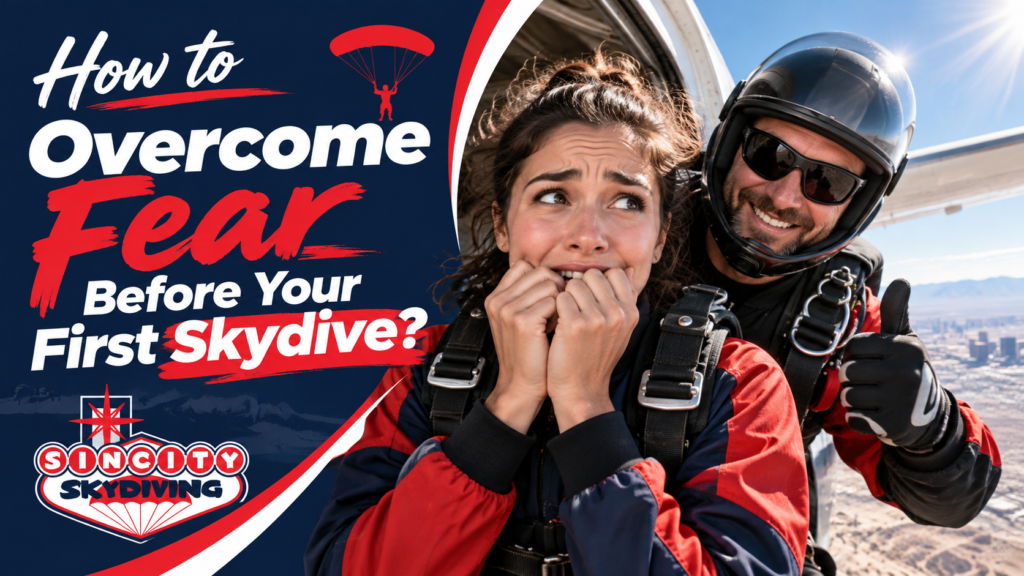
Feeling scared before your first skydive does not mean you are weak. It means your brain is doing its job: protecting you from something unfamiliar, intense, and high above the ground.
The good news? Overcoming skydiving fear is possible when you understand what to expect, prepare your mind, and trust the tandem process. For most first-time jumpers, fear drops once the training starts, the instructor explains the steps, and the experience becomes less mysterious.
This beginner skydiving guide will help you stay calm, manage nerves, and build real skydiving confidence before your first skydive experience.
Why Do People Feel Nervous Before Skydiving?
Skydiving anxiety usually comes from uncertainty, not just height.
Many first-time jumpers are not only afraid of falling. They are thinking:
- What will the plane ride feel like?
- Will I panic at the door?
- Is tandem skydiving safe?
- What if I have a fear of heights?
- What happens after freefall?
That fear is normal. Tandem skydiving for beginners is designed so a trained instructor handles the technical parts of the jump while you follow simple body-position and landing instructions. USPA explains that tandem, AFF, instructor-assisted deployment, and static-line jumps are all recognized first-jump methods within its student training pathway.
Is Fear of Heights the Same as Skydiving Fear?
Not always. Fear of heights skydiving anxiety can feel different from standing on a balcony or ladder.
When you are on a building, your brain sees a fixed ground reference. In a plane, the view feels more like looking at a wide landscape than standing on an edge. That does not mean you will feel zero fear, but many beginners with a fear of heights are surprised that the aircraft door feels different than expected.
Common fear triggers before a first jump
Fear Trigger | What Usually Helps |
Fear of heights | Focus on instructor cues, not the distance |
Fear of the unknown | Learn the jump sequence before arrival |
Fear of panic | Practice slow breathing |
Fear of safety | Choose a reputable, trained operation |
Fear of looking nervous | Remember almost every beginner is nervous |
How Safe Is Tandem Skydiving for Beginners?
Tandem skydiving carries real risk, but it is also a highly structured activity with training standards, equipment procedures, and instructor requirements.
According to USPA’s safety FAQ, USPA members reported 3.47 million skydives in 2025 and 16 civilian skydiving fatalities in the United States, equal to 0.46 fatalities per 100,000 jumps.
That statistic should not be used to pretend skydiving is risk-free. It is not. But it does show why choosing a professional drop zone, listening carefully, and following instructions matter.
What to check before booking
Choose a skydiving company that clearly explains:
- Instructor qualifications
- Tandem training process
- Weather policies
- Equipment and safety procedures
- Weight, age, and health requirements
- What is included in your package
USPA notes that USPA-affiliated drop zones must follow Basic Safety Requirements and use USPA-rated instructors.
How to Stay Calm Before Skydiving
The best way to stay calm before skydiving is to replace vague fear with specific preparation.
Here are practical skydiving anxiety tips that actually help.
1. Learn the jump sequence
Fear grows when your mind fills in the blanks. Before your jump, understand the basic flow:
- Check in and complete paperwork
- Meet your instructor
- Get safety briefing and gear
- Ride up in the aircraft
- Exit attached to your instructor
- Experience freefall
- Parachute opens
- Enjoy canopy flight
- Prepare for landing
Once you know what to expect during your first skydive, the experience feels less like chaos and more like a guided process.
2. Breathe before the aircraft door opens
One of the best first-time skydiving tips is simple: control your breathing before you try to control your thoughts.
Try this:
- Inhale through your nose for 4 seconds
- Hold for 2 seconds
- Exhale slowly for 6 seconds
- Repeat 5 times
Longer exhales tell your nervous system that you are not in immediate danger.
3. Do not fight the fear
Trying to “not be scared” usually makes fear louder. Instead, rename the feeling.
Say:
“This is adrenaline. My body is preparing for something exciting.”
That small mental shift can turn nervous energy into focus.
4. Ask your instructor direct questions
Good instructors expect nervous beginners. Ask practical questions like:
- What should I do with my hands?
- What position should my body be in?
- What happens when the parachute opens?
- What do I need to remember for landing?
Clear answers build trust.
Skydiving Mental Preparation: What to Tell Yourself
Mental preparation is not about pretending you are fearless. It is about giving your brain simple instructions.
Use these short reminders:
- “I only need to follow one step at a time.”
- “My instructor handles the technical work.”
- “Fear is normal before a first skydive.”
- “I can be nervous and still do this.”
- “The door is the hardest part; the experience changes after exit.”
This type of self-talk works because it gives your mind a job instead of letting it spiral.
Beginner Skydiving Preparation Tips
Your body affects your mindset. Arrive prepared so small discomforts do not turn into bigger anxiety.
Before your jump:
- Sleep well the night before
- Eat a light meal, not a heavy one
- Stay hydrated
- Wear comfortable athletic clothing
- Avoid alcohol before your jump
- Arrive early so you do not feel rushed
- Bring a supportive friend if allowed
Also, accept that weather delays can happen. Skydiving depends on safe conditions, and a delay is usually a sign the drop zone is making careful decisions.
What If You Panic at the Door?
Most beginners feel the biggest fear right before exit. That moment is intense because anticipation peaks.
The key is this: you do not need to perform perfectly. You only need to follow your instructor’s cues.
For tandem skydiving, you are physically connected to your instructor. Your job is usually simple: body position, head placement, legs back or up when instructed, and listening during landing preparation.
The fear usually changes quickly after exit. Many first-time jumpers describe the first seconds as overwhelming, then exciting, then surprisingly peaceful once the parachute opens.
Expert Takeaways for Overcoming Skydiving Fear
- Fear before skydiving is normal, especially for beginners.
- Anxiety usually comes from uncertainty, not just height.
- Learning the jump process reduces mental resistance.
- Breathing techniques help calm the body before exit.
- A reputable tandem operation matters more than chasing the cheapest price.
- Confidence comes from preparation, not pretending to be fearless.
Conclusion: You Do Not Need to Be Fearless
Overcoming skydiving fear does not mean removing every nervous thought. It means preparing well enough that fear does not make the decision for you.
Learn the process, choose a trustworthy skydiving center, listen to your instructor, breathe through the buildup, and let yourself be nervous without backing away from the experience.
Your first skydive is not just about jumping from a plane. It is about proving to yourself that courage can exist even when your hands are shaking.
FAQ's
Yes. Being nervous before skydiving is completely normal, especially before your first jump. Most beginners feel anxious during the plane ride and calmer once they understand what is happening.
Many people with a fear of heights still complete tandem skydives. Skydiving feels different from standing on a roof or balcony because there is no nearby edge or fixed ground reference.
Use slow breathing, learn the jump sequence, ask your instructor questions, and focus on one step at a time. Avoid caffeine overload, rushing, and doom-scrolling skydiving videos before your jump.
Yes. Tandem skydiving is one of the most common ways beginners experience skydiving because the student is attached to an instructor who manages the technical parts of the jump.
For many first-time jumpers, the hardest part is waiting in the aircraft and sitting near the open door. After exit, the fear often turns into adrenaline and excitement.